85 YEARS AGO TODAY

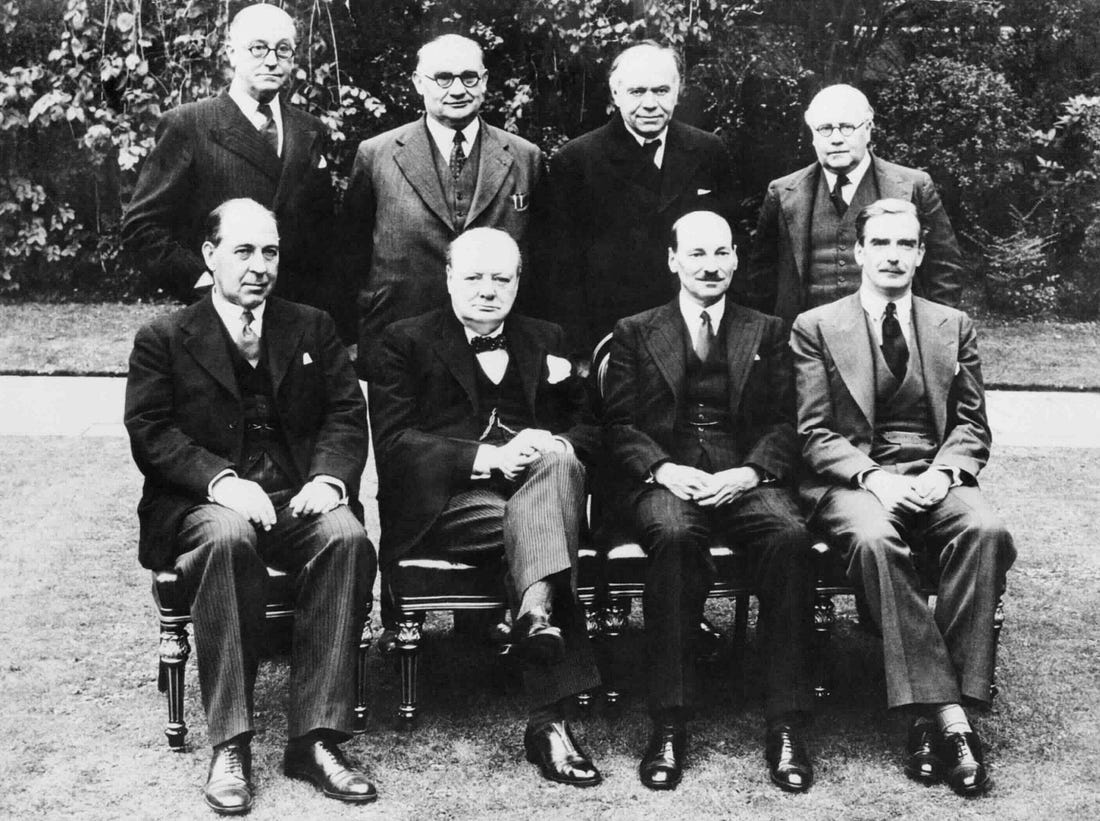
Churchill’s coalition war cabinet, named May 13, 1940
Events in France and Belgium were now unfolding very rapidly following the German attack on the Low countries three days earlier. As the British government tried to keep abreast of developments, the news was of an alarmingly successful airborne assault on the fort at Eben Emael - allowing the German panzers to threaten central Belgium far earlier than expected.
Two French Armored Divisions had gone forward into Belgium to meet what was expected to be the main German thrust. On the 13th May, the Battle of Hannut raged in central Belgium. In the largest clash of tanks the world had yet seen, over 600 tanks on each side fought it out. The superior French tanks, well supported by heavy artillery, were holding the line.
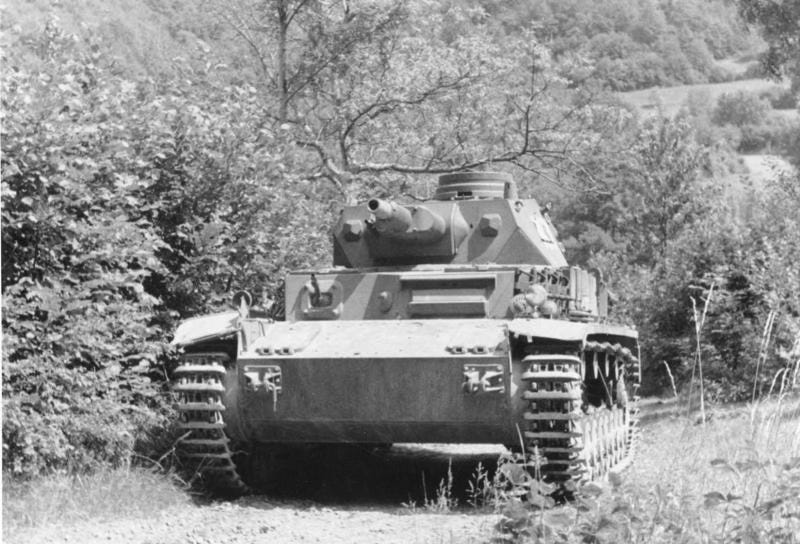
The more powerful Panzer Mk IV, the most powerful tank the Wehrmacht had and the only one capable of matching the French tanks, were strangely absent. There was ominous news that the Germans had pushed forward in a separate major thrust in the Ardennes Forest. The French town of Sedan, on the east bank of the Meuse River, was reported to have just been occupied. The Germans faced a weak area in the French defences, where the much vaunted Maginot Line tailed off.
It was against this background that Churchill, on his third day as Prime Minister, addressed the House of Commons for the first time as war leader:
“To form an Administration of this scale and complexity is a serious undertaking in itself, but it must be remembered that we are in the preliminary stage of one of the greatest battles in history, that we are in action at many points in Norway and in Holland, that we have to be prepared in the Mediterranean, that the air battle is continuous and that many preparations, ... have to be made here at home.
“In this crisis I hope I may be pardoned if I do not address the House at any length today. I hope at any of my friends and colleagues, or former colleagues, who are affected by the political reconstruction, all make allowance, all allowance, for any lack of ceremony with which it has been necessary to act. I would say to the House, as I said to those who have joined this Government: "I have nothing to offer but blood, toil, tears and sweat."
“We have before us an ordeal of the most grievous kind. We have before us many, many long months of struggle and of suffering.
“You ask, what is our policy? I will say: it is to wage war, by sea, land, and air, with all our might and with all the strength that God can give us: to wage war against a monstrous tyranny, never surpassed in the dark, lamentable catalogue of human crime. That is our policy. You ask, what is our aim? I can answer in one word: It is victory, victory at all costs, victory in spite of all terror, victory, however long and hard the road may be; for without victory, there is no survival.
“Let that be realized; no survival for the British Empire; no survival for all that the British Empire has stood for, no survival for the urge and impulse of the ages, that mankind will move forward towards its goal. But I take up my task with buoyancy and hope. I feel sure that our cause will not be suffered to fail among men. At this time I feel entitled to claim the aid of all, and I say, "Come then, let us go forward together with our united strength."
It’s a speech worth remembering here and now.
"blood Toil, Tears and Sweat " speech
Comments are for paid subscribers.
Thank you, Tom. Boy, could we use Winston Churchill and Franklin Delano Roosevelt now. The thing I most despised about parliamentary systems when I was a Canadian I wish we had now. The vote of 'no confidence' that led to a new election. We could certainly use a loud and raucous vote of no confidence now.
Blood, toil, tears and sweat. And we are only called upon to speak out against corruption, disloyalty and a fascistic non-ideology. And, really, what choice do we have? None, unless we are to abandon history.